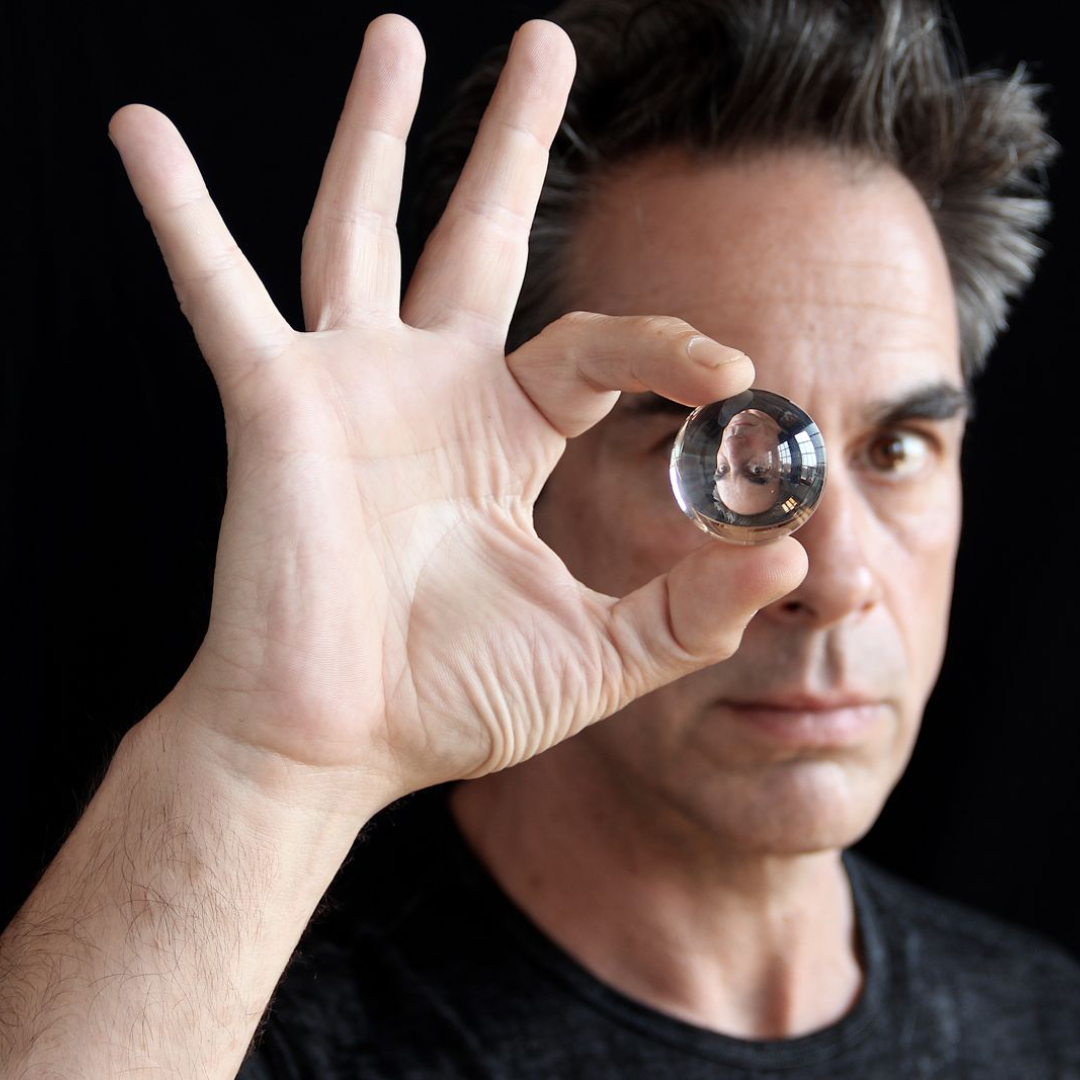
Serkan Özkaya is a Turkish-American conceptual artist whose practice explores questions of originality, reproduction, authorship, and the circulation of images within contemporary culture. Working across sculpture, installation, performance, publishing, digital media, and public interventions, Özkaya challenges conventional distinctions between the original and the copy, the authentic and the reproduced, often operating beyond the confines of traditional exhibition spaces. His works transform acts of replication into critical and poetic investigations of how value, meaning, and cultural memory are constructed.
Born in Istanbul in 1973, Özkaya's fascination with reproduction emerged from his early encounters with Western art through books and printed images rather than direct access to original masterpieces. This experience became a defining foundation of his artistic practice, leading him to question the privileged status of originality and the mechanisms through which artworks acquire cultural authority. Educated in both fine arts and German language and literature, Özkaya combines intellectual rigor with humor, irony, and conceptual experimentation.
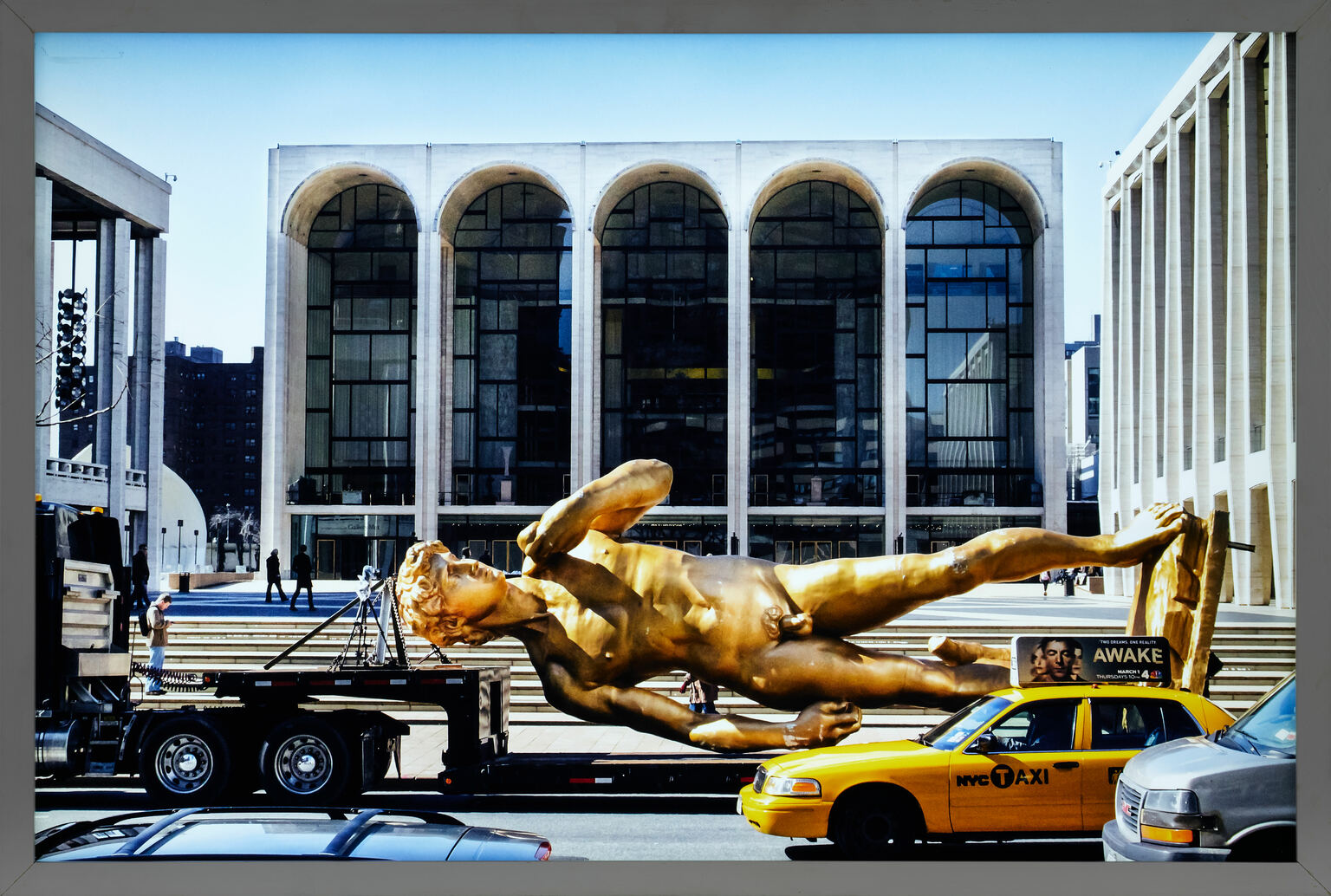
Internationally recognized for ambitious projects that reimagine iconic works and art historical narratives, Özkaya gained widespread attention with David (inspired by Michelangelo), a monumental gold-painted replica of Michelangelo’s David created at twice the scale of the original. Other notable projects include We Will Wait, a reconstruction of Marcel Duchamp’s Étant donnés that proposed a new interpretation of the celebrated work through the principles of camera obscura; One and Three Pasta, which transformed mathematical equations into idealized three-dimensional pasta forms; and An Attempt at Exhausting A Place, an installation that visually dissolved architectural boundaries through live projections.
Throughout his career, Özkaya has consistently blurred the boundaries between art history, technology, mass media, and everyday life. His projects have appeared in museums, galleries, public spaces, newspapers, and digital platforms, often inviting audiences to reconsider accepted narratives surrounding creativity, authenticity, and artistic production. Combining conceptual depth with playful provocation, his work occupies a distinctive position within contemporary art, offering critical reflections on how images, ideas, and cultural myths are endlessly reproduced and reinterpreted in the modern world.